 JumpstartJiBuy battery the right way
Inverter battery
Inverter battery basics: types, care and when to replace
What keeps your fans and lights running during a power cut, and how to make it last.
Inverter battery
What keeps your fans and lights running during a power cut, and how to make it last.
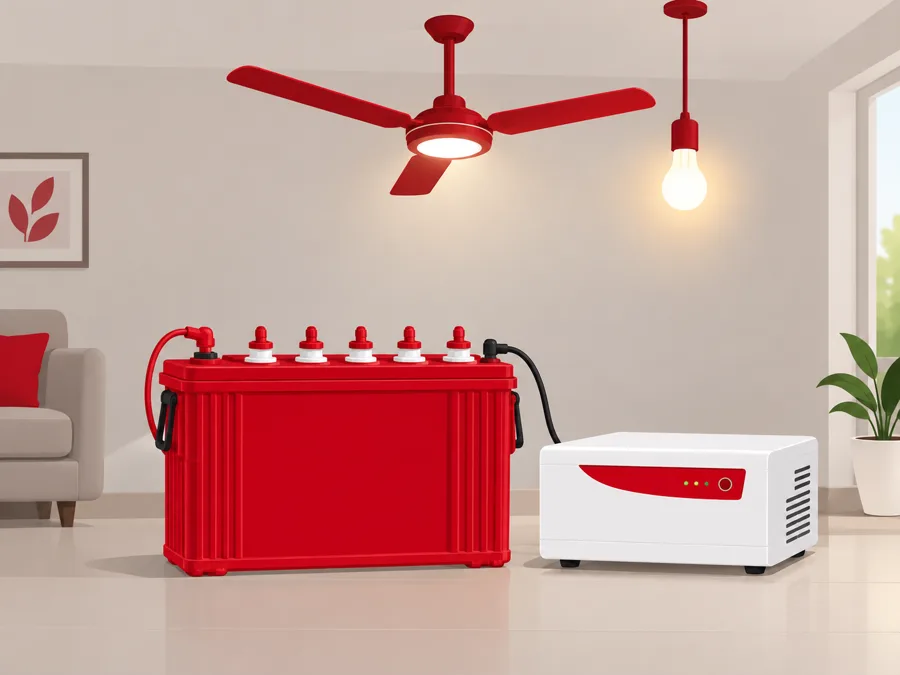
A power cut in Mumbai rarely lasts long, but when the fan stops mid-afternoon it feels long enough. The box that keeps your essentials running is really two parts: the inverter, which converts stored power into the electricity your home uses, and the battery, which does the actual storing. The inverter usually runs for years without attention. The battery is the part that wears out, and it is the part worth understanding.
Most home backup batteries sold in India are lead-acid. Within that, the common choice is between flat plate and tubular designs. Tubular batteries are built for deep discharge cycles, and manufacturer guidance recommends them for homes with frequent or long power cuts because they give longer backup and better durability (Luminous, inverter battery FAQs). Flat plate batteries suit lighter, shorter use.
There is also a maintenance difference. Tubular and other flooded lead-acid batteries need periodic water top-ups. Sealed (SMF/VRLA) batteries and lithium batteries do not, and should not be opened for water filling (Luminous, inverter battery water guide).
Battery capacity is measured in ampere-hours (Ah). A 150Ah battery suits moderate household use and shorter backup needs; a 200Ah battery fits larger homes, heavier loads, or longer backup duration. The right choice depends on what you want to run during a cut, so check the maker's load chart rather than guessing (Luminous, inverter battery FAQs).
If your battery has small caps or float indicators on top, it is the kind that needs water. Once every two to three months, glance at the float indicators: float high in the green zone means the level is fine, dropped to the red mark means that cell needs a top-up (Luminous, inverter battery water guide).
When you top up, use only distilled water. Tap water and even packaged drinking water contain minerals that slowly damage the battery from inside. Fill slowly, stop at the recommended mark, and never fill to the brim (Luminous, inverter battery water guide).
Two symptoms come first: backup time drops noticeably compared to when the battery was new, and the inverter starts giving frequent low-battery warnings. Manufacturer guidance lists both as signs it is time to plan a replacement (Luminous, inverter battery FAQs).
If your setup uses more than one battery, replace the full set together. Mixing new batteries with old ones unbalances charging and discharging and shortens the life of the whole bank (Luminous, inverter battery FAQs).
If your backup time has dropped or you are setting up backup for the first time, JumpstartJi now helps with inverter batteries for homes and societies in Bandra, Khar, Santacruz and Juhu. Ask about a free site visit and we will check your actual load before recommending a size.
Call or WhatsApp 8603 8603 37, 10 AM to 7 PM, Saturday to Thursday (closed Friday).
Inverter battery help →Is it the battery or the alternator?
Guidance in this post comes from Luminous India’s published inverter battery FAQs and its inverter battery water guide, linked on luminousindia.com. This is general guidance, not a substitute for a load check of your home.